
Latest Articles
Seven Sober-Friendly Cities and What Makes a Place Supportive
Explore seven sober-friendly US cities and learn how to assess recovery support, alcohol-free social life, practical access, community, and personal fit.
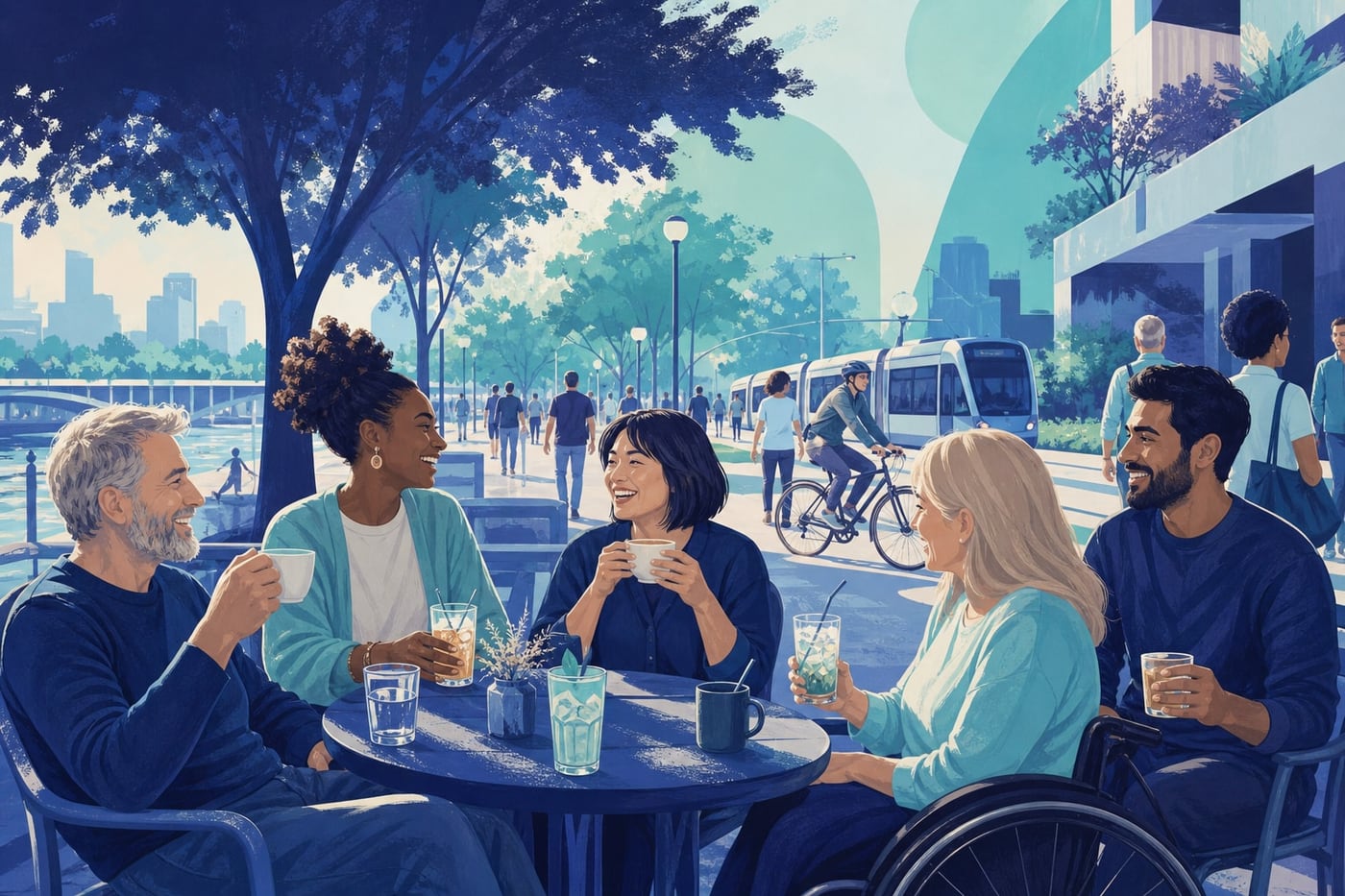
Choosing where to live or visit can shape daily sobriety. A supportive city makes it easier to meet people without alcohol, reach treatment or peer support, enjoy meaningful activities and get home safely. It does not need to be completely free of drinking culture.
Seven US cities that currently stand out for different reasons are Austin, Denver, New York City, Chicago, Minneapolis–Saint Paul, Seattle and Washington, DC. This is not a definitive ranking. Each offers a useful combination of alcohol-free social spaces, recovery communities, public activities or accessible support—but each also has drawbacks.
The best sober-friendly city is ultimately the one that fits your housing, finances, health needs, identity, transportation and support network. A famous zero-proof bar matters less than having safe housing and people you can call on a difficult evening.
What Makes a City Sober-Friendly?
A sober-friendly place offers more than mocktails. The US Substance Abuse and Mental Health Services Administration describes recovery through four broad dimensions: health, home, purpose and community. That is a useful framework for judging a city. (samhsa.gov)
Look for:
- Accessible care: Licensed treatment, primary care, mental health services and medication providers where needed.
- Several forms of peer support: Options may include 12-step fellowships, secular groups, culturally specific communities, recovery cafés and activity-based programs.
- Alcohol-free social life: Cafés open after work, zero-proof venues, community classes, sports, arts and events where drinking is not the central activity.
- Stable daily infrastructure: Affordable housing, employment, groceries, parks and practical transportation.
- Inclusive communities: Spaces where LGBTQ+ people, people with disabilities, parents, older adults and different cultural or faith groups can participate safely.
- Ways to build purpose: Volunteering, education, creative projects and outdoor activities can help life expand beyond simply avoiding substances.
Peer support is not the same as clinical care, but it can provide connection and shared experience. WHO recognizes mutual-help groups as resources through which participants support one another in maintaining recovery. (who.int)
1. Austin, Texas: Established Alcohol-Free Nightlife
Austin is one of the clearest US examples of a city developing nightlife specifically for people who do not drink. Sans Bar helped establish the city’s zero-proof scene, while local restaurants increasingly offer thoughtful nonalcoholic menus. Austin’s tourism organization describes Sans Bar as a central part of the local sober community. (austintexas.org)
The city also offers music, fitness groups, outdoor swimming and food-focused activities that do not require a bar order. This variety may appeal to people who want sociability without making recovery the subject of every outing.
Consider the trade-offs: Alcohol remains highly visible in Austin’s entertainment districts, summer heat can limit daytime activities and some neighborhoods are easier to navigate by car. Check how close prospective housing is to meetings, care and trusted people—not just downtown attractions.
2. Denver, Colorado: Activity-Based Recovery
Denver stands out for combining recovery community with movement. The Phoenix, a nonprofit sober active community based in Denver, organizes activities designed to build belonging through fitness, recreation and volunteering. Its wider program offers hundreds of weekly sober activities, including in-person Denver events. (thephoenix.org)
This model can be valuable for people who connect more naturally while climbing, exercising or completing a shared task than while sitting in a discussion circle. Denver’s parks and access to outdoor recreation create additional opportunities for alcohol-free weekends.
However, physical activity is a practical wellbeing option—not a substitute for treatment, medication or therapy. Denver also has a prominent brewery culture, and mountain recreation can be expensive or inaccessible without transportation. A supportive routine can include both active and non-active forms of connection.
3. New York City: Variety and Anonymity
New York offers an unusually broad range of communities, neighborhoods and evening activities. Hekate Café & Elixir Lounge in Manhattan operates as a sober bar, serving drinks containing no more than 0.5% alcohol by volume and hosting alcohol-free events. (hekatenyc.com)
The city’s scale can make it easier to find support that reflects a particular age group, identity, language, faith or recovery approach. Extensive public transportation may also help people attend activities without driving or depending on a drinking companion for a ride.
The same size can feel isolating, and living costs may put stable housing under pressure. Before moving, test the journey between home, work, support and healthcare. A meeting that looks close on a map may require a tiring transfer late at night.
4. Chicago, Illinois: Community Beyond Recovery Labels
Chicago has both dedicated alcohol-free businesses and community-led social groups. Chicago AF is a volunteer-run nonprofit serving people across the Greater Chicago area, including those who use terms such as sober, alcohol-free or sober-curious—and people who prefer no label. (chicagoafcommunity.com)
That broad welcome can reduce the pressure to explain why someone is not drinking. Chicago’s official visitor guide also highlights alcohol-free bars, bottle shops, late-night cafés and restaurants with nonalcoholic menus as year-round options rather than January-only novelties. (choosechicago.com)
Chicago is geographically large, so neighborhood choice matters. Winter weather, transportation time and event costs can affect whether an appealing community is realistically available every week.
5. Minneapolis–Saint Paul, Minnesota: Small Organizations With Strong Identity
The Twin Cities demonstrate that supportive culture does not depend on a large number of permanent sober bars. Local initiatives combine alcohol-free events, movement and identity-specific connection. Fully Vested Recovery Movement centers physical, mental and emotional wellbeing, while Out & Sober Minnesota connects LGBTQ+ people in recovery. (fullyvestedrecoverymovement.org)
Lucille’s, an alcohol-free events company, also organizes mobile bars, tastings and social experiences intended to include people who do not drink. (lucillesmn.com)
Dedicated businesses can change or close, so treat venues as entry points rather than the foundation of your plan. The stronger question is whether you can build several relationships and routines that will continue if one shop or event series disappears.
6. Seattle, Washington: Recovery Community With Practical Services
Seattle offers an example of support that reaches beyond leisure. Recovery Café provides a drug- and alcohol-free community space with meals, recovery circles, classes and events. Its services are designed for people recovering from substance use and other significant life challenges, including homelessness and mental health difficulties. (ccwa.doh.wa.gov)
The Seattle metropolitan area also has a large number of Alcoholics Anonymous meetings in varied settings, although AA is only one possible pathway and will not suit everyone. (seattleaa.org)
Seattle’s natural environment supports walking and outdoor activities, but housing costs, dark winters and neighborhood-level transportation differences deserve careful consideration. People affected by seasonal mood changes may want to discuss prevention and support with a qualified healthcare professional.
7. Washington, DC: Alcohol-Free Socializing in a Compact Setting
Washington, DC combines cultural activities, public transportation and an emerging zero-proof scene. Binge Bar on the H Street corridor is a dedicated alcohol-free venue offering food, nonalcoholic drinks and events such as sober comedy shows and live entertainment. (binge-bar.com)
A venue like this can provide the atmosphere of an evening bar without alcohol service. That may help people who miss nightlife, dating or live entertainment more than they miss drinking itself.
DC can nevertheless be expensive, and alcohol remains common at professional networking events. People working in political, hospitality or corporate environments may need clear boundaries and an exit plan. Our guide to staying sober at social events offers practical preparation without assuming that every alcohol-serving venue must be avoided.
How to Assess a City Before You Visit or Move
A weekend trip gives a limited picture. If possible, examine the city as if you already lived there:
- Search several support directories. Include clinical providers, peer groups and community activities rather than relying on one fellowship.
- Check the exact neighborhood. Calculate realistic travel times to care, work, groceries and support during evenings and bad weather.
- Review event calendars over several weeks. A city may look active during Dry January or a recovery festival but offer less during an ordinary month.
- Ask what “alcohol-free” means. Some venues serve products containing trace alcohol, cannabis-derived ingredients, kava or other psychoactive or “functional” substances.
- Price an ordinary month. Include rent, transportation, healthcare, meeting contributions, food and social activities.
- Make contact before arriving. Introduce yourself to a group, recovery community organization or trusted professional.
- Identify more than one safe space. Build a list that includes a daytime café, evening activity, outdoor option and place for direct support.
If starting conversations feels difficult, see how to find sober friends and build a recovery community. A wider recovery support system may include healthcare professionals, peers, family, friends and community organizations.
A Note About Nonalcoholic Drinks
Personal choice: Some people enjoy alcohol-free beer, wine or cocktails. Others find the taste, setting or ritual triggering and prefer entirely different drinks. Neither response is a measure of commitment.
US labeling: A malt beverage labeled “non-alcoholic” may contain less than 0.5% alcohol by volume, while “alcohol free” is reserved for malt beverages containing no alcohol. Rules and terminology differ internationally, so check the local label rather than relying on the venue’s description. (ttb.gov)
Also ask about bitters, fermented ingredients and functional additives. “Alcohol-free” does not automatically mean free from every intoxicating or medication-interacting substance.
Medical Safety Comes Before Location
Moving to a supportive city does not make abrupt withdrawal safe. People who have been drinking heavily or regularly may face potentially life-threatening alcohol withdrawal if they suddenly stop. NIAAA advises that some people need medical support for withdrawal. (niaaa.nih.gov)
Seek urgent medical help for seizures, hallucinations, severe confusion, collapse or rapidly worsening symptoms. Contact local emergency services; in the United States, call 911. Learn more in Alcohol Withdrawal Symptoms: Timeline and Warning Signs.
Conclusion
A sober-friendly city provides choices: different communities, accessible care, safe housing, purposeful activities and places where alcohol is not the price of admission. Austin, Denver, New York, Chicago, Minneapolis–Saint Paul, Seattle and Washington, DC each offer promising examples, but no city is automatically supportive for every person.
Judge the neighborhood and daily routine—not just the nightlife headlines. The right place is one where practical stability and human connection are available on ordinary days as well as difficult ones.
Frequently Asked Questions
What does “sober-friendly city” mean?
It generally means a city where people can find alcohol-free activities, supportive communities and appropriate health or recovery services without being excluded from social life. It does not mean alcohol is absent. The quality of support can differ sharply between neighborhoods and between people with different identities, incomes or accessibility needs.
Should I move to a new city during early recovery?
Moving can remove someone from harmful circumstances, but it can also create stress, loneliness and disruption. Consider housing, healthcare continuity, employment, finances and who will provide immediate support. Discussing the decision with trusted people or qualified professionals may reveal risks that are difficult to see alone.
How can I verify that a city is supportive before traveling?
Contact organizations directly, check current calendars and confirm that listed venues remain open. Ask whether events are completely substance-free, wheelchair accessible, affordable and reachable by transportation you can use. If possible, schedule one supportive contact before arrival rather than waiting until you feel isolated.
Are sober bars suitable for everyone in recovery?
No. Some people appreciate familiar nightlife without alcoholic drinks. Others find bar décor, drink names, crowds or beverages that imitate alcohol uncomfortable. Some venues also serve trace-alcohol or psychoactive products. Review the menu in advance and choose according to your boundaries, health needs and recovery goals.
Which sober-friendly city is best for someone in early recovery?
There is no universal winner. Prioritize stable housing, appropriate clinical care, reliable transportation and nearby trusted support. A quieter affordable neighborhood with one dependable community may be more helpful than a celebrated city center with high costs and constant exposure to drinking.