
Recovery Essentials
How to Find Sober Friends and Build a Recovery Community
Learn how to find sober friends through meetings, activities, online groups and one-to-one connection—and build a supportive recovery community that lasts.
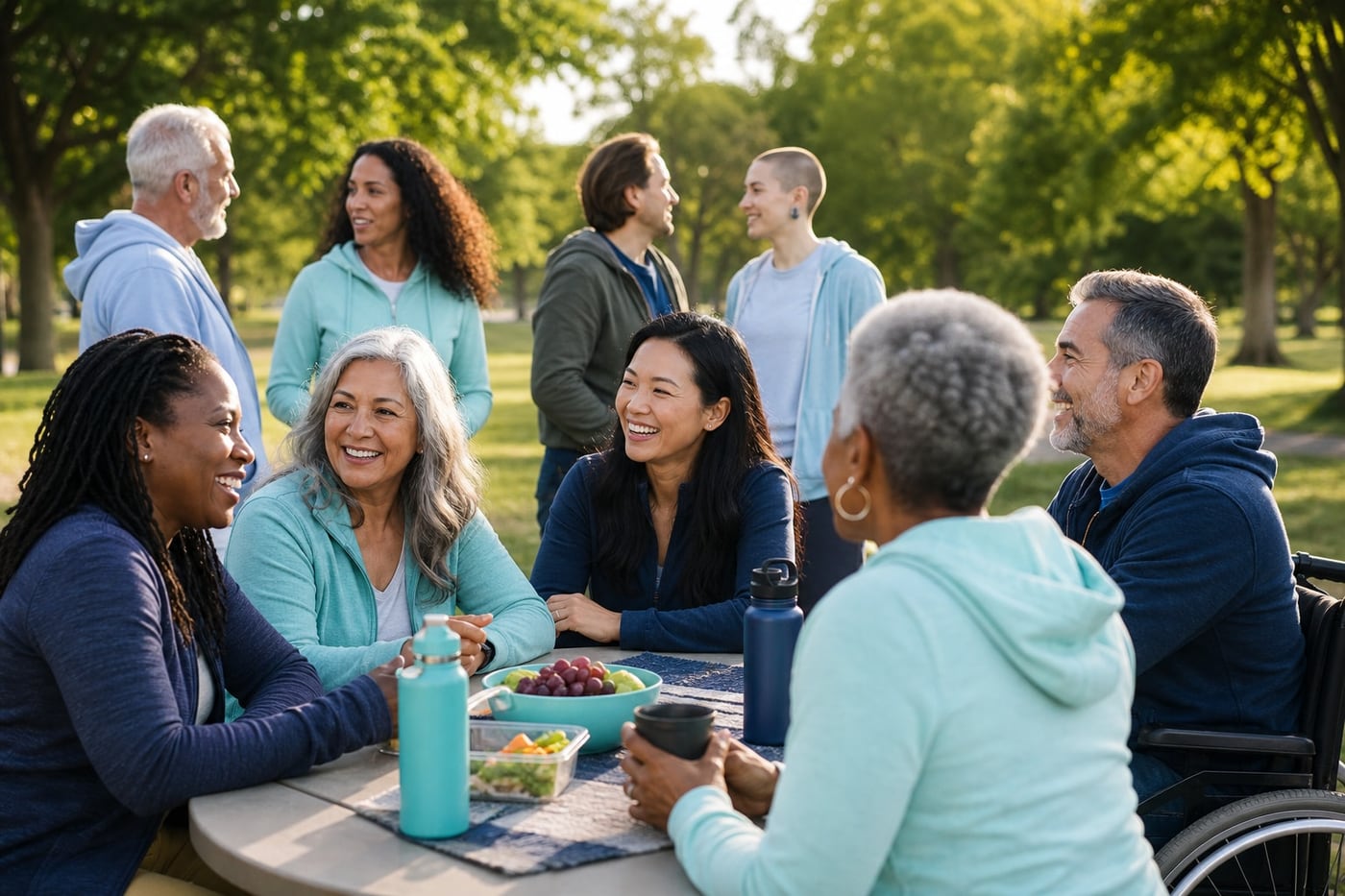
Finding sober friends usually starts with showing up repeatedly in places where alcohol or other drug use is not the focus. Try mutual-support meetings, recovery community centers, alcohol-free activities, volunteering, classes, faith or cultural groups, and moderated online communities. Then take one small social step: introduce yourself, return regularly, exchange contact details and suggest a specific low-pressure activity.
You do not need a large circle immediately. One person you can message honestly, one reliable weekly group and one enjoyable substance-free activity can provide a practical starting point. Friendship normally develops through repeated contact, shared experiences and follow-through—not one perfect conversation.
Why recovery community matters
Recovery is personal, but it does not have to be solitary. The US Substance Abuse and Mental Health Services Administration (SAMHSA) includes community—relationships and social networks that offer friendship, support and hope—as one of four major dimensions of recovery. SAMHSA also describes peer workers as people who use relevant lived experience to help others build skills, relationships and engagement in recovery. (samhsa.gov)
For alcohol recovery specifically, a 2020 Cochrane review found strong evidence that structured Twelve-Step Facilitation designed to encourage Alcoholics Anonymous participation can improve continuous abstinence compared with some other established treatments. That finding does not mean AA is the only effective path or that every meeting suits every person. It shows that ongoing mutual help can be a meaningful part of recovery for many people. (cochrane.org)
International guidance also recognizes peer recovery support, community participation and social reintegration as possible elements of continuing care for people with drug use disorders. Availability, terminology and service organization differ substantially by country. (iris.who.int)
Where to find sober friends
Try several mutual-support groups
Mutual-support meetings place you around people who understand at least part of what you are navigating. Options vary in philosophy and format:
- Twelve-step fellowships such as Alcoholics Anonymous or Narcotics Anonymous
- Secular, skills-focused programs such as SMART Recovery
- Groups designed for particular identities, substances or life experiences
- Faith-based or spiritually oriented recovery groups
- Meditation-based recovery communities
- Groups for people pursuing moderation, when that goal is appropriate for them
You do not have to decide whether a whole program is right for you after one meeting. Group dynamics can differ, so NIAAA recommends trying several meetings to find one where you feel comfortable. Mutual-support groups may reinforce professional treatment, but they are generally not led by clinicians. (alcoholtreatment.niaaa.nih.gov)
Attend a few different formats and notice where conversation feels respectful and useful. If spirituality is not right for you, try a secular option. If a large meeting is overwhelming, look for a smaller group, newcomer session or online meeting.
Ask treatment and peer-support services for introductions
Counselors, outpatient programs, recovery community organizations and certified peer specialists may know about local meetings, social events, volunteer projects and activity groups. Unlike an informal friend, a peer specialist has a defined support role and may be trained or certified under local requirements.
If you are comparing professional and nonclinical roles, read Recovery Coaches, Sober Companions and Peer Support Explained.
United States: SAMHSA’s FindTreatment.gov lists mental health and substance use treatment services in the United States and its territories. Its National Helpline, 1-800-662-HELP (4357), provides free, confidential information and referrals in English and Spanish, 24 hours a day. State, county and tribal behavioral health agencies may also maintain local peer-support directories. (samhsa.gov)
Outside the United States: Start with your national or regional health service, public health authority, primary care provider, addiction service or an established mutual-help organization. Meeting availability, professional credentials, costs and confidentiality rules vary by jurisdiction.
Build friendships around an activity
Not every sober friendship has to begin with a discussion about recovery. Shared activities can reduce pressure because conversation develops while everyone is doing something together.
Consider:
- Walking, hiking or running groups
- Community sports or fitness classes
- Book clubs, art workshops or language classes
- Board-game gatherings and alcohol-free cafés
- Volunteering, mutual aid or environmental projects
- Faith, cultural or LGBTQ+ community events
- Parenting groups and family-friendly activities
- Music, gardening, cooking or maker groups
Check whether the activity is genuinely comfortable for you. A sports club that routinely ends at a bar may not provide the setting you need, particularly in early recovery. An event does not have to carry a “sober” label, but its culture should respect your boundaries.
Use online communities as a bridge
Online meetings and forums can be especially valuable if you live in a rural area, have limited transportation, work irregular hours, have caregiving responsibilities or need identity-specific support unavailable locally. AA offers online and phone meetings, while SMART Recovery Global lists online and in-person meetings in multiple locations. (smartrecoveryglobal.org)
Protect your privacy while you learn the culture of a community:
- Use a limited profile rather than publishing your full history.
- Review whether sessions are moderated and whether recording is prohibited.
- Avoid sharing your address, workplace or financial information publicly.
- Be cautious if someone quickly pressures you for money, housing or an intimate relationship.
- Move from public discussion to private messaging gradually.
Online connection can become real friendship, but it is reasonable to verify identities and meet in a public place if you eventually connect offline.
Reconsider people you already know
Some existing friends, relatives or colleagues may be willing to spend time together without alcohol, even if they do not identify as sober. Try a direct invitation:
“I’m not drinking, and I’m looking for more things to do that don’t revolve around alcohol. Would you like to get coffee or go for a walk this weekend?”
Their response provides useful information. A person who respects your decision, avoids interrogation and makes an effort to include you may become an important ally. Someone who repeatedly pressures you to use substances may require firmer boundaries.
How to turn sober acquaintances into friends
Meeting people is only the first step. These practical actions can help a connection grow.
1. Become a familiar face
Choose one or two places you can attend consistently. Repetition makes introductions easier and gives you time to assess how people behave—not just how they present themselves once.
Try arriving ten minutes early or staying briefly afterward. Those quieter periods often create more natural opportunities to speak than the main event itself.
2. Make a small, specific invitation
“Let’s hang out sometime” is easy to forget. A clear suggestion is easier to accept:
- “Would you like coffee after next Thursday’s meeting?”
- “I’m going to the Saturday morning walk. Want to join me?”
- “Would you be interested in a weekly check-in by text?”
Keep early plans short and affordable. A 30-minute coffee or walk carries less pressure than an entire day together.
3. Follow up without chasing
Send a brief message after meeting someone: “It was good talking today. I’ll be at the same group next week.” If they respond warmly, suggest another contact. If they repeatedly do not answer, leave space and continue meeting others.
Rejection or silence can feel personal, but people may be busy, socially anxious or focused on their own recovery. One unanswered message is not a verdict on your ability to make friends.
4. Practice appropriate mutuality
Healthy friendship involves giving and receiving over time. Ask questions, remember details and offer practical encouragement, but avoid becoming someone’s only crisis contact. You are allowed to say, “I care about you, but I’m not equipped to handle this alone. Can we contact professional support?”
A friend, sponsor, peer worker, recovery coach and therapist have different roles. Building a broader recovery support system reduces the pressure on any single relationship.
5. Create a predictable social rhythm
Connection becomes easier when it has a place on the calendar. You might arrange:
- A weekly meeting and coffee
- A Sunday walk
- A monthly alcohol-free meal
- A group chat for weekend plans
- A brief evening check-in during a difficult period
A sobriety tracker or calendar can remind you to plan connection before loneliness or cravings intensify, but technology does not replace human or professional support.
How to recognize a healthy recovery community
A supportive group does not need to match every preference, but it should treat people with dignity.
Encouraging signs include:
- Respect for different recovery pathways
- Clear confidentiality expectations
- Freedom to listen without being forced to disclose
- Consistent boundaries around money, sex and personal information
- Welcoming behavior toward newcomers
- Willingness to recommend medical or mental health care when needed
- Accountability without humiliation
Warning signs include:
- Claims that the group guarantees recovery
- Pressure to stop prescribed medication without speaking to a qualified clinician
- Demands for large payments, unpaid labor or complete loyalty
- Racist, sexist, homophobic, transphobic or otherwise degrading behavior
- Romantic or sexual pressure toward newcomers
- Discouraging all contact with family, clinicians or outside support
- Sharing members’ stories, images or identities without consent
One uncomfortable interaction does not necessarily define an entire organization, but you do not have to remain in a particular group. Speak with a facilitator where appropriate, try another meeting or leave if you feel unsafe.
What if socializing feels difficult?
You can build community gradually without becoming highly outgoing.
- If you are shy: Prepare one question, such as “Have you attended this group before?”
- If you value privacy: Attend under your first name only where permitted, listen initially and disclose selectively.
- If you have social anxiety: Consider discussing graded social goals with a licensed mental health professional.
- If you are a parent or caregiver: Look for daytime, online or family-friendly gatherings.
- If you have accessibility needs: Ask about step-free access, captions, interpreters, sensory conditions or participation by phone.
- If you feel culturally isolated: Search for groups organized around language, faith, ethnicity, gender, sexuality or profession.
You can also invite a trusted person to accompany you to an open meeting or public activity.
Community does not replace medical care
Friendship and peer support are valuable, but they are not substitutes for withdrawal management, medication, psychotherapy or emergency care when those services are needed.
Abruptly stopping alcohol or benzodiazepines can produce dangerous withdrawal in some people. If you may be physically dependent, seek medical guidance rather than relying on friends to monitor you. Learn more in Alcohol Withdrawal Symptoms: Timeline and Warning Signs.
If social situations expose you to strong pressure or triggers, plan transportation, supportive contact and an exit in advance. How to Stay Sober at Social Events offers more detailed strategies.
A simple 30-day community-building plan
Try this flexible plan rather than attempting to create an entire social circle at once:
- List three possible meetings, groups or activities.
- Attend one event during the first week.
- Return to the most promising option at least twice.
- Introduce yourself to one person each time.
- Exchange contact information with someone who feels safe and respectful.
- Suggest one coffee, walk or online check-in.
- Add one recurring activity to your calendar.
- At the end of 30 days, keep what helps and replace what does not.
Progress may look like recognizing familiar faces, feeling less nervous at a meeting or having one person to contact. Those are meaningful foundations for community.
Conclusion
To find sober friends, spend time consistently in recovery-friendly settings and make small, specific efforts to connect. Try more than one community, choose people who respect your boundaries and allow trust to develop through repeated contact. The goal is not to collect as many contacts as possible. It is to build a varied, dependable network in which you can participate honestly and safely.
Frequently asked questions
Where can I meet sober friends near me?
Start with mutual-support meetings, recovery community centers, outpatient programs, volunteering, exercise groups, classes and alcohol-free events. In the United States, SAMHSA, local behavioral health agencies and peer-support organizations can help identify nearby resources. Elsewhere, consult official national or regional health services and local meeting directories.
Do I have to attend AA to make friends in recovery?
No. AA is one widely available pathway, but alternatives include SMART Recovery, other secular or spiritual groups, recovery community organizations and activity-based gatherings. You can also build supportive friendships with people who drink but consistently respect your boundaries.
How soon should I exchange phone numbers with someone?
There is no required timeline. If conversation feels comfortable, you might exchange details after a meeting and suggest a simple check-in. Share personal information gradually, especially online, and pay attention to whether the other person respects boundaries.
What if I do not connect with anyone at my first meeting?
Try attending the same meeting several times or visit a different format. Familiarity often develops slowly, and each group has its own atmosphere. A poor fit does not mean peer support or sober friendship will not work for you.
Can online sober friends provide enough support?
Online friendships can offer meaningful companionship and may be the most accessible option for some people. When possible, combine them with local relationships, professional care or practical community support. Use moderated spaces, protect identifying information and be cautious about financial or romantic pressure.