
Going Deeper
Why Sugar Can Feel Addictive During Early Sobriety
Sugar cravings are common in early sobriety. Learn why sweets can feel addictive, what the evidence says, and practical ways to respond without shame.
Strong sugar cravings can be surprising during early sobriety. A person may stop drinking and suddenly want candy, chocolate, ice cream, sweetened coffee or soda far more often than before. The urge can feel urgent, repetitive and difficult to control—sometimes enough to raise fears that one addiction has simply been replaced by another.
The short answer is that sweets can provide a fast, familiar reward while the brain, appetite, sleep and daily routines are adjusting to life without alcohol. Hunger, nutritional disruption, stress, learned habits and a preference for immediate relief can all contribute. Research has found increased sweet cravings or consumption in some people during early recovery, but it does not establish that everyone develops a clinical “sugar addiction.” (pmc.ncbi.nlm.nih.gov)
For many people, a temporary increase in sweets is less immediately dangerous than returning to alcohol. It can still be useful to understand the pattern, especially if sugar is affecting health, mood or a sense of control.
Why sugar cravings may increase after stopping alcohol
There is no single explanation. Early sobriety involves overlapping biological, psychological and practical changes, and each person’s experience is different.
Sweet foods offer a quick and predictable reward
Alcohol can become strongly connected with reward, emotional relief and anticipation. Repeated heavy drinking can affect brain systems involved in motivation, stress, impulse control and craving, and some changes may continue after alcohol use stops. (niaaa.nih.gov)
Sweet foods are not chemically equivalent to alcohol, but they can provide an immediate pleasant experience. A dessert requires little effort, works quickly and is widely available. During a period when enjoyment may feel muted or emotions may feel uncomfortable, that reliable reward can be especially appealing.
This relates to the broader role of immediate gratification in reinforcing addictive behavior. The brain learns not only what feels good, but also which action offers the fastest change in how a person feels.
Appetite can return during recovery
Alcohol supplies substantial energy but few essential nutrients. Heavy alcohol use may also disrupt eating patterns, reduce food quality and contribute to deficiencies or problems involving the liver, pancreas, digestion and fluid balance. When alcohol is removed, appetite may return and the body may begin signaling more clearly for food. (medlineplus.gov)
Someone who previously drank through dinner, skipped breakfast after drinking or obtained many daily calories from alcohol may simply be hungrier than expected. Highly palatable sweet foods are an easy response to that hunger.
This is one reason cravings should not automatically be interpreted as a personal failure. They may partly reflect an underfed body asking for accessible energy.
Hunger can resemble an alcohol craving
Hunger can produce irritability, restlessness, shakiness, difficulty concentrating or a strong sense that something is wrong. In early recovery, these sensations may be confused with an urge to drink. MedlinePlus specifically notes that people recovering from substance use may interpret hunger as a drug or alcohol craving and that regular meals can be helpful. (medlineplus.gov)
Eating something may relieve the discomfort, reinforcing the idea that sweets are the answer. If this happens repeatedly, reaching for sugar can become a learned response to almost any unsettled feeling.
True low blood glucose is different from an ordinary food craving. It can cause sweating, shaking, dizziness, confusion and other rapidly developing symptoms. Heavy alcohol use without enough food can contribute to low blood glucose, but recurring symptoms require medical assessment rather than self-treatment based on guesswork. (medlineplus.gov)
Alcohol and sweet preferences may overlap
Research suggests that some—but not all—people with alcohol use disorder have a strong preference for very sweet tastes. Studies have also observed increased sweet cravings and sugar intake during early recovery, although many have been small or produced inconsistent results. (pmc.ncbi.nlm.nih.gov)
A recent systematic review found mixed evidence on whether eating sweets reduces alcohol craving or helps people remain abstinent. Some findings suggested a possible benefit, while others found no benefit or even an association between earlier sweet consumption and later alcohol craving. The review concluded that the research is too varied and limited to support sugar as a treatment for alcohol cravings. (pmc.ncbi.nlm.nih.gov)
In other words, wanting sweets is a recognizable recovery experience, but “eat sugar to prevent relapse” is not an established medical recommendation.
Sweets can replace an established ritual
Drinking often occupies a particular time, place and sequence: arriving home, opening a bottle, sitting down and feeling the day change. Removing alcohol leaves both an emotional gap and a behavioral one.
A sweet drink, dessert or evening snack may fill that ritual. The new routine can feel soothing because it has a clear beginning and a small reward at the end. That does not necessarily mean sugar dependence has developed; it may mean the old drinking cue is still looking for a response.
Stress and difficult emotions can intensify the pull
Early sobriety can involve anxiety, irritability, boredom, grief or a reduced ability to experience pleasure. Sweet foods may become a convenient way to interrupt those feelings.
In one small early-recovery study, using sweets to cope with negative emotions predicted later sweet craving. The finding is preliminary, but it supports a useful practical question: Am I physically hungry, or am I trying to change an emotion quickly? The answer can be both. (pmc.ncbi.nlm.nih.gov)
Sleep disruption may add another layer. Alcohol commonly disrupts sleep, and sleep may remain unsettled for a period after drinking stops. Addressing how alcohol affects sleep and what changes after stopping may make food and alcohol urges easier to understand.
Does this mean sugar is addictive?
Sugar can feel addictive because a person may experience intense desire, repeated use and difficulty stopping once they begin. However, “sugar addiction” is not a formally recognized diagnosis in major diagnostic systems, and human evidence that sugar alone produces addiction in the same way as alcohol or other drugs remains limited and debated. Research often finds that highly processed foods combining refined carbohydrates and fat—not pure sugar alone—are most associated with addiction-like eating. (pmc.ncbi.nlm.nih.gov)
That distinction should not be used to dismiss distress. A pattern can deserve attention without needing the addiction label.
Professional support may be appropriate if eating involves recurrent loss of control, unusually large amounts of food, secrecy, intense shame, purging, fasting or significant distress. Binge-eating disorder and other eating disorders are recognized health conditions that can occur alongside substance use disorders. (nimh.nih.gov)
Evidence-based health guidance versus personal recovery choices
It helps to separate broad health guidance from decisions about getting through early sobriety.
Evidence-based guidance
Balanced nutrition, adequate fluids and regular meals can support general health during recovery. Nutritional deficiencies, liver disease, pancreatic problems, diabetes or persistent digestive symptoms may require assessment by a physician and, where available, a registered dietitian nutritionist. (medlineplus.gov)
United States: FDA labeling distinguishes naturally occurring sugars in foods such as fruit and milk from added sugars used during processing or preparation. The US Daily Value is 50 grams of added sugar on a 2,000-calorie diet, reflecting guidance to keep added sugar below 10% of daily calories. This is a population-level reference, not an individualized prescription. (fda.gov)
International context: The World Health Organization uses the term free sugars, which includes added sugars as well as sugars in honey, syrups and fruit juice. WHO recommends keeping free sugars below 10% of total energy intake and suggests that below 5% may provide additional health benefits. National recommendations and food labels vary. (who.int)
Personal recovery choices
A person may decide that having dessert is a reasonable short-term tool for getting through a difficult evening without alcohol. Another may feel better limiting sweets because of diabetes, dental concerns, binge eating or uncomfortable energy fluctuations.
Neither choice is a universal sobriety rule. Unless a clinician has advised otherwise, early recovery does not have to become an immediate pursuit of a flawless diet. Safety, alcohol abstinence, adequate nourishment and sustainable routines may be more urgent priorities than eliminating every source of added sugar.
Practical ways to respond without shame or rigid restriction
The following are practical suggestions, not individualized medical treatment.
1. Eat before cravings become overwhelming
Aim for a reasonably consistent pattern of meals and snacks. Long gaps without food can make it harder to tell emotional urges, alcohol cravings and ordinary hunger apart.
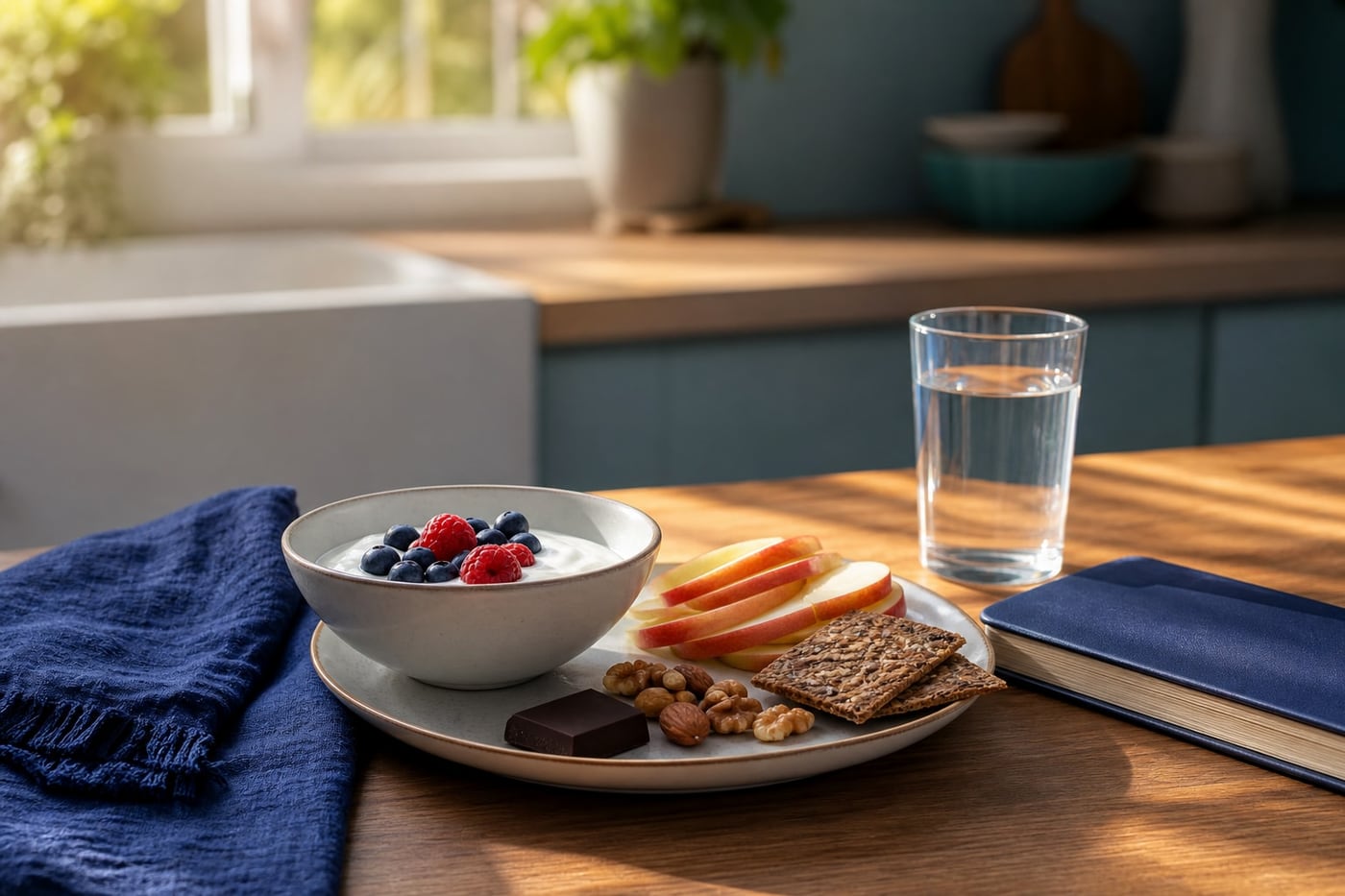
Meals that combine carbohydrates, protein, fat and fiber may be more satisfying than sweets alone. Examples include:
- Oatmeal with milk or fortified soy drink, fruit and nuts
- Eggs with whole-grain toast and vegetables
- Rice or potatoes with beans, fish, chicken or tofu
- Yogurt with berries and seeds
- An apple with peanut butter
2. Plan sweets rather than declaring them forbidden
Strict prohibition can create an all-or-nothing cycle for some people. A planned dessert or portioned snack may feel calmer than repeatedly resisting until the urge becomes overwhelming.
Try placing the sweet food on a plate, sitting down and eating it without multitasking. The goal is not perfect control; it is making the experience more deliberate.
3. Add nourishment before trying to subtract sugar
Instead of beginning with “I must stop eating candy,” consider:
- Adding breakfast after years of skipping it
- Keeping an easy protein-rich snack available
- Drinking water regularly
- Adding fruit or vegetables to an existing meal
- Choosing a more filling evening snack
These additions may reduce urgency without turning food into another source of punishment.
4. Identify what the craving is asking for
Pause briefly and check for:
- Physical hunger
- Thirst
- Fatigue
- An alcohol cue
- Anxiety or loneliness
- A need for stimulation or reward
- A familiar evening ritual
Then respond to the strongest need. Food may still be part of the answer, but it does not have to carry the whole burden.
5. Keep alcohol-craving strategies separate
Sugar should not be the only plan for a strong alcohol urge. NIAAA recommends recognizing triggers, avoiding high-risk situations where possible and developing coping responses for predictable cravings. (rethinkingdrinking.niaaa.nih.gov)
That might include contacting a trusted person, changing location, attending a support meeting, using a coping skill learned in treatment or following a written recovery plan. A broader recovery support system offers more protection than any single snack or strategy.
6. Get help when the pattern feels unsafe or unmanageable
Speak with a qualified health professional if sweet cravings occur alongside fainting, confusion, persistent shaking, unexplained weight change, vomiting, severe digestive symptoms or known diabetes, liver or pancreatic disease. Seek eating-disorder-informed support if eating regularly feels out of control or leads to marked distress or compensatory behaviors.
Alcohol withdrawal is a separate and potentially dangerous issue. Abruptly stopping after regular heavy drinking can cause seizures, hallucinations or delirium and may require medical supervision. Review the alcohol withdrawal timeline and warning signs, and contact local emergency services for severe symptoms. In the United States, call 911 for an immediate medical emergency.
Conclusion
Sugar can feel addictive during early sobriety because it provides fast reward, satisfies returning hunger, fills old routines and may briefly soften difficult emotions. Some people also appear to have overlapping preferences for alcohol and very sweet tastes, although the evidence is mixed and sugar is not a proven treatment for alcohol cravings.
Respond with curiosity rather than shame. Regular nourishment, planned choices and a separate strategy for alcohol urges can help make the pattern more manageable. If eating feels out of control or physical symptoms are concerning, professional assessment is more useful than stricter self-discipline.
Frequently asked questions
How long do sugar cravings last after quitting alcohol?
There is no dependable universal timeline. Cravings may be strongest in the first days or weeks, but they can continue or recur as sleep, appetite, stress and routines change. Persistent cravings do not prove that recovery is failing. Consider professional guidance if they are causing distress or affecting a health condition.
Is it better to eat sugar than drink alcohol?
In an immediate high-risk moment, eating a sweet food is generally less dangerous than returning to alcohol, particularly for someone with alcohol use disorder. However, sugar is not a relapse-prevention treatment. Use established craving strategies and professional or peer support rather than relying on sweets alone.
Should I remove all sugar during early sobriety?
Not necessarily. There is no medical rule requiring everyone in recovery to eliminate added sugar. Abrupt, rigid restriction may be unhelpful for some people. Individual needs differ, especially for people with diabetes, eating disorders, dental problems or other health conditions.
Can quitting alcohol cause low blood sugar?
Stopping alcohol does not automatically cause hypoglycemia. However, heavy alcohol use, inadequate food intake and liver or pancreatic problems can interfere with glucose regulation. Sweating, shaking, dizziness or confusion should not simply be assumed to be a sugar craving; seek medical advice, particularly if symptoms recur.
What snacks may help with sweet cravings in recovery?
Options combining sweetness with protein, fat or fiber may feel more satisfying, such as fruit with nuts, yogurt with berries, whole-grain toast with nut butter or a small dessert after a balanced meal. These are practical options rather than medical requirements; choose foods that suit your health needs, culture, budget and preferences.