Latest Articles
The Morning After Drinking: Could You Still Be Over the Limit?
Could you still be over the driving limit the morning after drinking? Learn how BAC falls, why hangovers mislead, US limits, and safer choices.
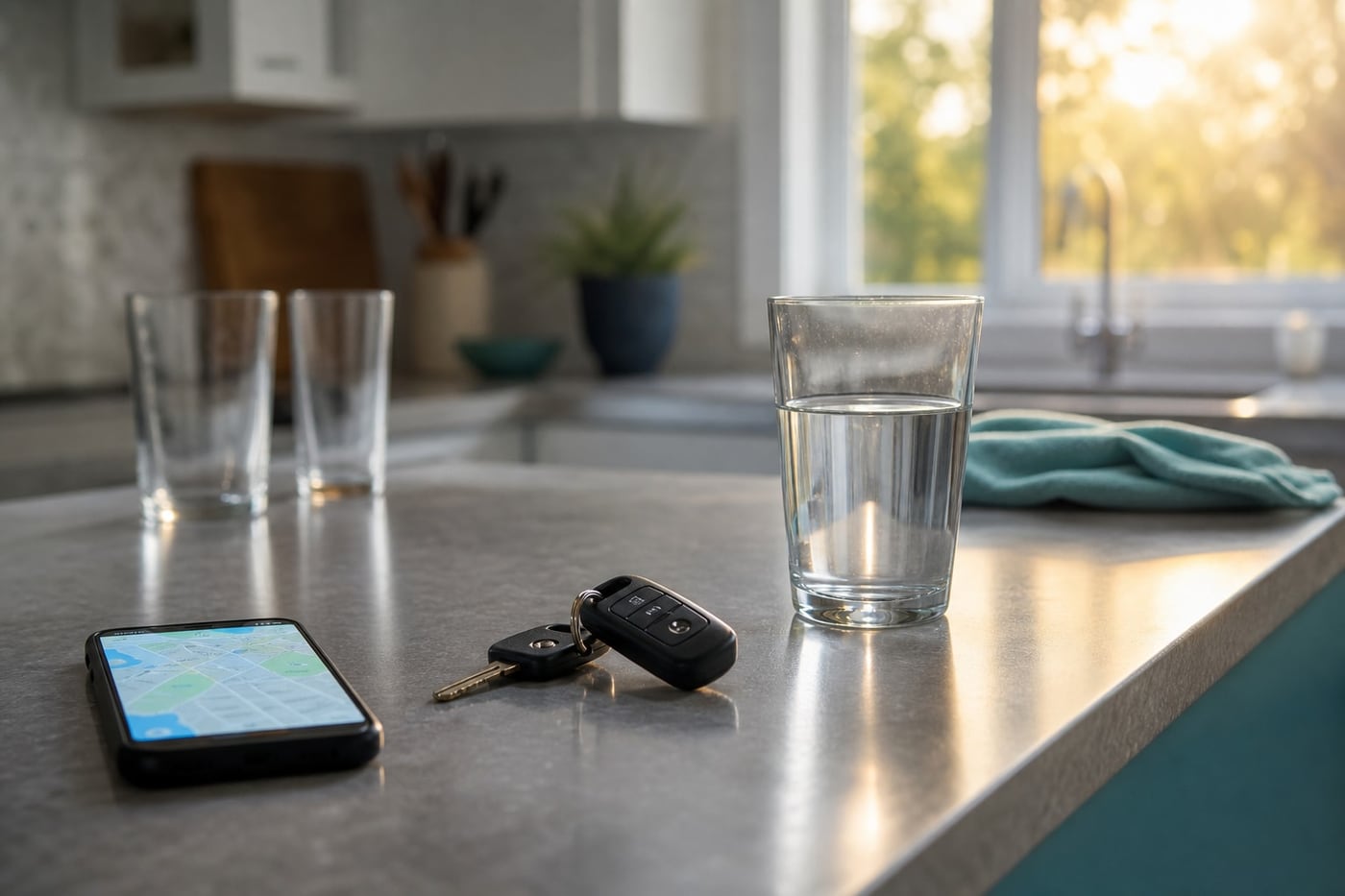
Yes. You can still be over the legal alcohol limit the morning after drinking, even if you have slept, eaten breakfast, taken a shower or no longer feel drunk. Alcohol leaves the body gradually, and a late night involving several drinks can leave a measurable blood alcohol concentration (BAC) well into the next day.
The safest answer is simple: if you are uncertain whether all the alcohol has cleared—or you feel hungover, tired, dizzy or mentally slow—do not drive. Arrange a ride, use public transportation, work remotely if possible or delay the journey. Feeling better is not proof that you are legally or functionally safe to drive.
Why alcohol can remain in your body the next morning
After you drink, alcohol is absorbed into your bloodstream and distributed through the body's water. Your liver processes most of it, but it cannot instantly remove a large amount.
The National Highway Traffic Safety Administration (NHTSA) uses an average BAC reduction of about 0.015 percentage points per hour for educational purposes. However, the actual rate varies between people and can change within the same person. Factors such as body composition, genetics, liver function, drinking pattern and the timing of your last drink all matter. (nhtsa.gov)
For perspective, at that average rate, a BAC of 0.15 could take approximately 10 hours to fall to zero. That is an illustration—not a personal countdown or a guarantee. You may not know your peak BAC, and alcohol can continue entering the bloodstream after your final drink.
This is why rules such as “one drink per hour” are not reliable enough for deciding whether to drive. Drinks may contain more alcohol than expected, particularly large wine pours, strong cocktails and high-alcohol craft beers.
What counts as one drink?
In the United States, one standard drink contains approximately 14 grams, or 0.6 fluid ounces, of pure alcohol. That is roughly:
- 12 fluid ounces of 5% beer, about 355 milliliters
- 5 fluid ounces of 12% wine, about 148 milliliters
- 1.5 fluid ounces of 40% distilled spirits, about 44 milliliters
A single container or serving may contain two or more standard drinks. For example, a 12-ounce beer at 10% alcohol by volume contains about two US standard drinks. (niaaa.nih.gov)
Standard-drink definitions vary internationally. A standard drink contains 10 grams of alcohol in Australia, for example, while some other countries use different measurements. When estimating what you consumed, use the definition and alcohol labeling applicable where you are.
Morning-after BAC: why counting hours is unreliable
Imagine someone stops drinking at 1 a.m. and plans to drive at 8 a.m. Seven hours have passed, but that alone does not establish safety.
Their remaining BAC depends on:
- How much alcohol they actually consumed
- How strong and large each drink was
- How quickly they drank
- Whether BAC continued rising after the final drink
- Their peak BAC and individual elimination rate
- Whether they also used cannabis, sedating medication or other drugs
NIAAA explains that alcohol is absorbed more rapidly than it is metabolized. Eating can slow absorption and reduce the peak BAC, but food does not prevent intoxication or remove alcohol already circulating in the body. (niaaa.nih.gov)
Online BAC calculators can provide rough educational estimates, but they cannot measure your actual BAC or certify that you are safe to drive. Avoid using an estimate that happens to fall just below a legal threshold as permission to get behind the wheel.
Coffee, sleep and showers do not clear alcohol faster
Coffee may make you feel more alert, but caffeine does not restore alcohol-impaired judgment or coordination. Likewise, cold showers, exercise, vomiting, fresh air and a large breakfast do not meaningfully accelerate alcohol metabolism. Only time allows the body to process alcohol. (niaaa.nih.gov)
Sleep is valuable, but being asleep does not make the liver remove alcohol faster. A few hours in bed may leave you with both residual alcohol and insufficient sleep—two separate threats to safe driving.
A “hair of the dog,” meaning another alcoholic drink in the morning, adds more alcohol and may delay recovery. It should never be used to make driving feel manageable.
US driving limits and important exceptions
Most US drivers age 21 and older
As of August 2026, the illegal per se BAC limit is 0.08 g/dL in most US states, the District of Columbia and Puerto Rico. Utah has a lower limit of 0.05 g/dL. A per se limit means the BAC result itself can establish an offense without separate proof that the person's driving was visibly impaired. (nhtsa.gov)
However, 0.08 is not a safety target. Driving skills can decline at lower BAC levels, and a person may be arrested below 0.08 when their behavior or driving provides evidence of impairment. State laws and offense names differ, so check the current rules where you are driving. (nhtsa.gov)
Drivers under 21
Every US state has a zero-tolerance law for drivers younger than 21, generally setting a BAC threshold of 0.02 g/dL or lower. Exact provisions and penalties vary by state. (nhtsa.gov)
Commercial drivers
Under federal rules, a person operating a commercial motor vehicle that requires a commercial driver's license is considered to be driving under the influence at 0.04% BAC or higher. Federal workplace rules can also remove a commercial driver from safety-sensitive duties following an alcohol test result from 0.02 to below 0.04. (fmcsa.dot.gov)
People with previous impaired-driving convictions, ignition-interlock conditions, probation requirements or employer policies may face additional restrictions.
Driving limits vary around the world
Do not assume the US limit applies while traveling. Many countries use a general BAC limit of 0.05 g/dL, and some impose limits of 0.02 or zero. Lower limits commonly apply to novice, young or professional drivers. European Union countries set their own national traffic laws rather than following one EU-wide BAC limit. (europa.eu)
In the United Kingdom, the blood alcohol limit is 80 milligrams per 100 milliliters of blood in England, Wales and Northern Ireland, but 50 milligrams per 100 milliliters in Scotland. UK government guidance explicitly warns that someone may be unfit to drive the morning after drinking the previous evening. (gov.uk)
Readers in the UK can find a more detailed regional explanation in Drink-Driving After Alcohol: UK Limits, Risks and Consequences.
Always check the official rules for your country, state, province or territory, especially when driving abroad or renting a vehicle.
You may be unsafe even when your BAC is zero
A hangover often peaks around the time BAC returns to approximately zero. Symptoms can last 24 hours or longer, and may affect attention, coordination and decision-making. That means a zero BAC does not automatically make someone fit to drive, operate machinery or perform safety-critical work. (niaaa.nih.gov)
Common reasons to avoid driving include:
- Dizziness or blurred vision
- Nausea or vomiting
- Headache that interferes with concentration
- Shakiness or poor coordination
- Unusual anxiety or agitation
- Trouble focusing or remembering information
- Severe tiredness or repeated yawning
- Feeling slowed down, detached or confused
Alcohol also fragments sleep, so you may have slept for several hours without receiving restorative rest. Fatigue independently reduces reaction time and judgment. Learn more in How Alcohol Affects Sleep and What Changes After You Stop.
Can a personal breathalyzer tell you when it is safe?
A well-maintained breath-testing device may provide more information than guessing based on how you feel. However, personal devices vary in quality, calibration and correct use. Law-enforcement evidential devices are subject to specific performance, maintenance and calibration requirements. (nhtsa.gov)
A personal breathalyzer should therefore be treated as an additional warning tool—not a guarantee of legality or safe driving. A reading below the local limit does not rule out impairment, fatigue, a hangover or the effects of another substance. Never drive if the device registers alcohol, if results are inconsistent or if you do not feel fully well and alert.
Practical choices for the morning after
The following are practical safety suggestions rather than medical treatment:
- Make the decision before bed. If you drank heavily or finished late, assume you will not drive early the next morning.
- Move the keys. Leave them with a trusted person or somewhere that interrupts an automatic morning routine.
- Arrange alternatives early. Book a ride, identify public transportation or ask whether an appointment can be delayed.
- Do not drive children or other passengers if uncertain. Responsibility for others is a reason to use a larger safety margin, not a smaller one.
- Consider work risks beyond driving. Avoid forklifts, power tools, heights, clinical tasks and other safety-sensitive duties while impaired or significantly hungover.
- Review what happened later. If morning-after uncertainty is becoming common, note when drinking started, what you consumed and what consequences followed. This can reveal patterns without turning the exercise into a BAC prediction tool.
If repeated drinking is affecting driving, work, sleep or relationships, support is available. A clinician can offer confidential screening and discuss options without attaching a moral label. If you are considering a change, How to Stop Drinking Safely and Build Strong Support explains why some people need medical guidance rather than abruptly stopping alone.
When the situation may be an emergency
Do not assume someone who is extremely unwell the next morning merely needs to “sleep it off.” Difficulty waking, confusion, seizures, repeated vomiting, slow or irregular breathing, bluish or very pale skin, or loss of consciousness can indicate an alcohol overdose or another medical emergency. Contact local emergency services immediately. In the United States, call 911. (niaaa.nih.gov)
If a person who drinks regularly wakes with severe shaking, hallucinations, confusion or a seizure after reducing or stopping alcohol, seek urgent medical help. Alcohol withdrawal can become life-threatening and may require supervised treatment.
Conclusion
You can remain over the driving limit for many hours after your last drink, including the following morning. Sleep, coffee, food and showers do not remove alcohol faster, and neither your feelings nor a rough calculation can confirm that you are safe.
When there is doubt, leave the keys where they are. Delaying a journey or finding another ride is a small inconvenience compared with risking injury, legal consequences or someone else's life.
Frequently asked questions
How long after drinking can I drive?
There is no universal number of hours. It depends on how much you drank, your peak BAC, when absorption finished and your individual elimination rate. If you cannot confidently establish that the alcohol has cleared—or you remain hungover or tired—do not drive.
Can I still fail a breath test at 8 a.m. after drinking the night before?
Yes. A late finish or high alcohol intake can produce a positive result the next morning. Sleeping does not accelerate alcohol metabolism, and your BAC may still have been rising for a period after your final drink.
Does throwing up reduce my BAC?
Vomiting may remove some alcohol that has not yet been absorbed, but it does not remove alcohol already in the bloodstream. It is not a reliable way to lower BAC or become fit to drive. Repeated vomiting can also be a warning sign requiring medical attention.
Am I safe to drive if I do not have a hangover?
Not necessarily. Some people have little or no hangover despite having residual alcohol, while others feel hungover after BAC reaches zero. Symptoms and BAC are different measures, and neither feeling normal nor feeling unwell provides an exact BAC reading.
What should I do if I have to get to work but may still be over the limit?
Do not drive. Tell your employer you cannot travel safely, request a delayed start or remote work if available, and use a taxi, rideshare, public transportation or a sober driver. People in safety-sensitive jobs should also consider whether they are fit to perform the work itself, not only the journey.