
Latest Articles
Does Non-Alcoholic Beer Contain Alcohol? A Recovery Guide
Does non-alcoholic beer contain alcohol? Learn how labels work, possible recovery triggers, and how to decide whether alcohol-free beer fits your goals.
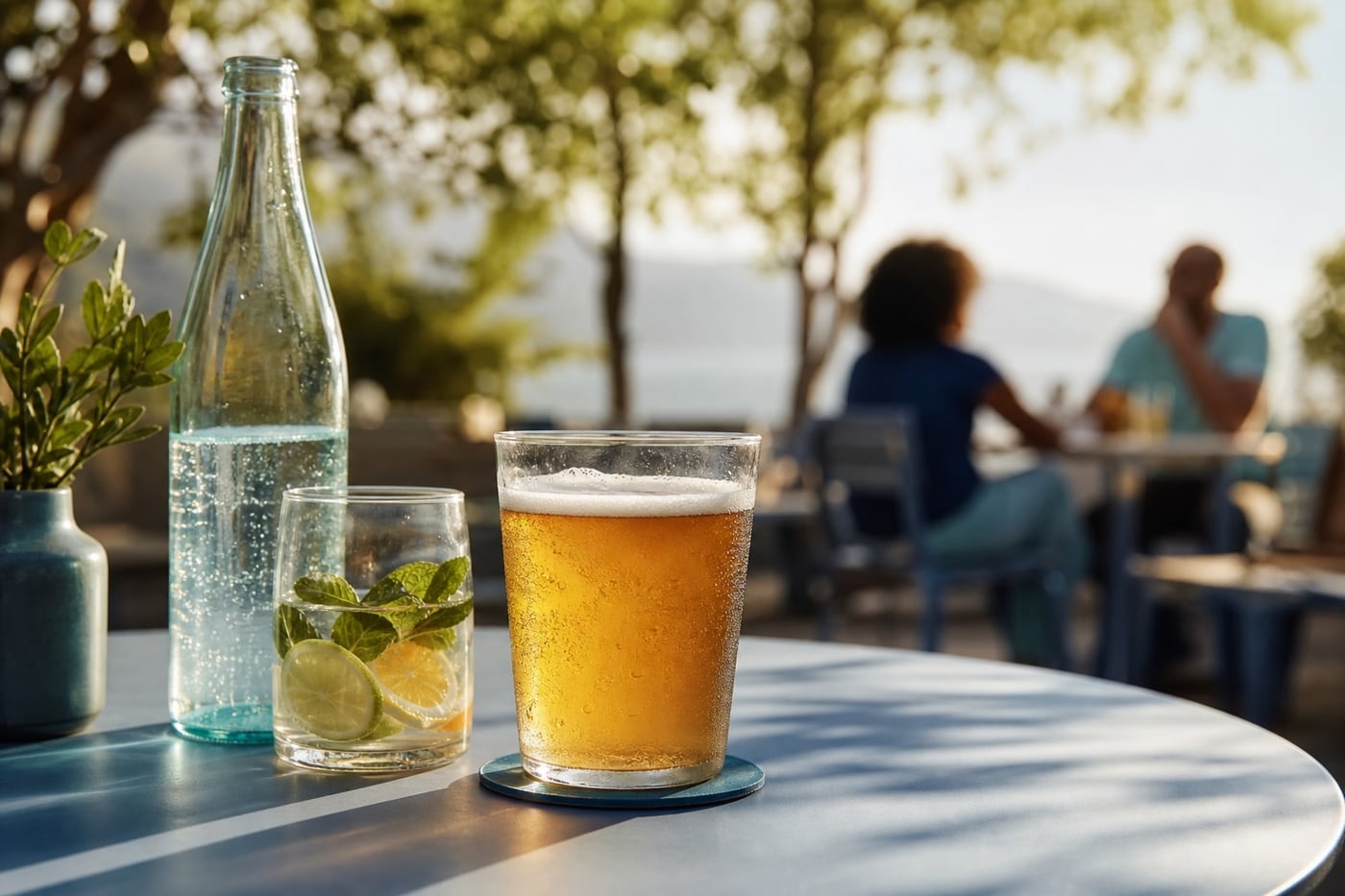
Non-alcoholic beer often contains a small amount of alcohol. In the United States, a malt beverage labeled “non-alcoholic” may contain less than 0.5% alcohol by volume (ABV). A US product labeled “alcohol free,” however, must contain no alcohol under federal malt-beverage labeling rules. Because terminology differs internationally, the ABV statement is usually more useful than the product name alone. (ttb.gov)
Whether non-alcoholic beer is right for recovery is a separate question. Some people find that it makes social situations easier and provides a satisfying substitute. Others find that the smell, taste, packaging or drinking ritual increases alcohol cravings. Current evidence does not support one universal rule, so the safest choice depends on the label, your health needs, your recovery goals and how you respond to alcohol-related cues.
How Much Alcohol Is in Non-Alcoholic Beer?
ABV describes the percentage of a drink’s volume that is pure alcohol. Regular beer is often around 5% ABV, although strengths vary widely. Non-alcoholic beer may be labeled anywhere from 0.0% to just under 0.5% ABV in the United States.
At the upper US limit, a 12-fluid-ounce serving—about 355 milliliters—of beer at 0.5% ABV contains approximately 1.4 grams of alcohol. That is about one-tenth of a US standard drink. A 500-milliliter serving at the same strength contains just under 2 grams. One US standard drink contains approximately 14 grams of pure alcohol. (niaaa.nih.gov)
The actual amount may be lower because “less than 0.5%” is a maximum, not a promise that every product contains exactly 0.5%. If complete avoidance matters, look for a specific 0.0% ABV statement and an “alcohol free” designation rather than relying only on prominent “zero” or “non-alcoholic” marketing.
United States labeling terms
Under US Alcohol and Tobacco Tax and Trade Bureau rules for malt beverages:
- Non-alcoholic: Less than 0.5% ABV, with the alcohol statement displayed next to the term.
- Alcohol free: No alcohol.
- Low alcohol or reduced alcohol: Less than 2.5% ABV—far more alcohol than a typical non-alcoholic beer and potentially inconsistent with an abstinence goal. (ttb.gov)
Imported products and beverages that do not fall under the same regulatory category may be presented differently. Read the entire label, including smaller print.
Important international differences
Alcohol-labeling terminology is not consistent worldwide.
- United Kingdom: Current government guidance generally reserves “alcohol free” for drinks at or below 0.05% ABV and “de-alcoholised” for drinks at or below 0.5% ABV. (gov.uk)
- Canada: Federal excise information describes non-alcoholic beer as containing no more than 0.5% alcohol by volume. (canada.ca)
- Australia and New Zealand: Label requirements change at 0.5% ABV, but exact product descriptions and sale rules should still be checked locally. (foodstandards.gov.au)
Other countries may permit different thresholds. When buying a local or imported product, use the printed ABV rather than assuming that “alcohol free,” “zero” and “non-alcoholic” mean the same thing everywhere.
Can Non-Alcoholic Beer Affect Recovery?
What the evidence tells us
Alcohol-related sights, smells, places, glassware and routines can act as learned cues. For some people with alcohol use disorder, these cues may produce thoughts about drinking or a physical and emotional urge to drink. NIAAA recognizes people, places, objects and times associated with past alcohol use as potential triggers. (niaaa.nih.gov)
Research specifically examining non-alcoholic and low-alcohol drinks in people with alcohol use disorder remains limited. A systematic review found that the available studies were scarce and varied considerably. Some reported increased craving or desire to drink after exposure to these products, but the evidence was not strong enough to determine whether they are helpful or harmful for everyone in recovery. (pmc.ncbi.nlm.nih.gov)
This means two common claims go beyond the evidence:
- Non-alcoholic beer does not inevitably cause relapse.
- It also cannot be assumed to be a risk-free recovery tool for every person.
A person’s immediate response provides useful information. Wanting a regular beer after drinking a non-alcoholic one, becoming preoccupied with the next drink, consuming it rapidly or feeling compelled to hide it may indicate that the substitute is creating more difficulty than benefit.
Why some people choose it
Non-alcoholic beer may offer practical benefits when it does not increase urges. A person might choose it because they:
- Enjoy the flavor without wanting intoxication.
- Want an easy alternative at a restaurant, wedding or sporting event.
- Prefer a packaged drink that reduces questions from other people.
- Are reducing alcohol consumption rather than pursuing strict abstinence.
- Find that it helps them participate in a social ritual without returning to regular beer.
These are personal experiences, not guaranteed medical benefits. If alcohol-focused settings are difficult, planning matters more than the specific beverage. Our guide to staying sober at social events covers drink offers, boundaries, support and exit strategies.
Why others avoid it
A person may reasonably decide that non-alcoholic beer is not worth the risk because:
- Beer was closely connected to their past alcohol use.
- The taste or smell produces cravings.
- Holding the bottle recreates a ritual they are trying to change.
- It makes regular beer seem more appealing or manageable.
- The product contains trace alcohol that conflicts with their recovery definition.
- Their treatment program, recovery community or household has an agreed alcohol-free boundary.
- They prefer to build new routines that are not modeled on drinking.
Avoiding non-alcoholic beer is not an overreaction. Choosing it without difficulty is not evidence that someone is less committed to recovery. The relevant question is whether the choice supports safety and the life the person wants to build.
A Practical Way to Decide
The following is a decision aid, not individualized medical advice.
1. Check the exact alcohol content
Turn the container around and find the ABV. Do not rely on the product’s color, shelf location or front-label branding. If your goal is no intentional alcohol exposure, a clearly marked 0.0% alcohol-free product may fit that goal better than one containing up to 0.5% ABV.
At a bar or restaurant, ask to see the unopened bottle or can. This also reduces the chance of accidentally receiving a regular beer in similar-looking glassware.
2. Consider your current stability
It may be sensible to avoid experimenting when cravings are already strong, during a stressful transition, immediately after a return to drinking or when support is limited. Instead, discuss the decision with a clinician, counselor, sponsor, peer-support contact or another trusted person who understands your goals.
If urges are becoming more frequent, review these practical ways to respond to alcohol cravings.
3. Notice what happens before, during and afterward
Useful questions include:
- Am I choosing this for the flavor, or hoping to recreate the feeling of drinking?
- Does seeing or smelling it increase my urge for alcohol?
- Do I feel satisfied after one, or preoccupied with having more?
- Does it lead me toward regular beer, alcohol-focused venues or old routines?
- Would I feel comfortable discussing this choice with someone who supports my recovery?
If the experience increases cravings, stop and switch to a drink that does not imitate alcohol. Contacting a supportive person early may prevent an uncomfortable urge from becoming a larger problem.
4. Define what “sober” means for you
Recovery goals vary. Some people define sobriety as no intoxication or regular alcoholic drinks. Others avoid every product containing measurable alcohol. Mutual-support groups and treatment programs may also have different views.
A non-alcoholic beer does not automatically determine whether someone has “relapsed.” Intent, behavior, effects and the person’s established recovery agreement all matter. If a drink was consumed accidentally, responding with honesty and support is generally more constructive than shame or an automatic conclusion that all progress has been lost.
Who Should Be Especially Careful About Trace Alcohol?
People who need complete alcohol avoidance for medical, medication, pregnancy, religious or personal reasons should not assume that “non-alcoholic” means zero.
The US prescribing information for disulfiram warns people to avoid alcohol and alcohol-containing preparations because even small exposures may cause a reaction. Anyone taking disulfiram should ask their prescriber or pharmacist about specific beverages rather than testing a product themselves. (accessdata.fda.gov)
For pregnancy, the US Centers for Disease Control and Prevention states that there is no known safe amount or safe time for alcohol use. People who are pregnant or trying to become pregnant can discuss products containing trace alcohol with their prenatal healthcare professional and choose verified alcohol-free options. Guidance may differ in wording by country, but complete avoidance during pregnancy is widely recommended. (cdc.gov)
Medical advice may also be appropriate for people with alcohol-related liver disease or another condition affected by alcohol. Product choice should not replace care from a qualified professional.
Non-Alcoholic Beer Does Not Treat Withdrawal
Non-alcoholic beer is a beverage option, not a treatment for alcohol dependence or withdrawal. If someone has been drinking heavily or regularly, abruptly stopping alcohol can cause dangerous withdrawal and may require medical supervision.
Seizures, hallucinations, severe confusion, extreme agitation, fainting, chest pain, breathing difficulty or persistent vomiting require urgent medical help. Contact local emergency services; in the United States, call 911. Learn more about alcohol withdrawal symptoms and warning signs.
Conclusion
Non-alcoholic beer can contain alcohol: in the United States, the term generally means less than 0.5% ABV, while alcohol-free malt beverages must contain none. Definitions vary internationally, making the printed ABV the most reliable starting point.
For recovery, there is no universal answer. A non-alcoholic beer may be a useful substitute for one person and an uncomfortable trigger for another. Check the label, consider your recovery goals and medical needs, and pay attention to whether the experience reduces alcohol use or strengthens the urge to drink.
Frequently Asked Questions
Is 0.5% non-alcoholic beer actually alcohol free?
No. A drink at 0.5% ABV contains a small but measurable amount of alcohol. In the United States, “non-alcoholic” malt beverages must be below 0.5% ABV, while “alcohol free” means no alcohol under federal labeling rules. Terminology differs in other countries.
Can non-alcoholic beer make you drunk?
A 12-ounce or 355-milliliter serving at 0.5% ABV contains roughly one-tenth of a US standard drink, so it contains much less alcohol than regular beer. However, it is not accurate to treat a trace-alcohol product as identical to water, particularly when several servings are consumed or complete avoidance is medically necessary.
Does drinking non-alcoholic beer count as a relapse?
There is no universal definition covering every recovery pathway. Some people and programs consider any intentional alcohol exposure inconsistent with sobriety, while others focus on intoxication or a return to harmful alcohol use. Review your own recovery agreement and discuss uncertainty with a trusted support person rather than responding with shame.
Can I drink non-alcoholic beer while taking disulfiram?
Do not assume it is safe. US prescribing information warns against alcohol-containing products because small amounts may cause a reaction. Ask the clinician who prescribes your medication or a pharmacist about the exact product. Do not test your reaction yourself.
What can I drink if alcohol-like beverages trigger cravings?
Options include sparkling water with citrus, iced tea, flavored seltzer, alcohol-free botanical drinks or another familiar soft drink. Check fermented drinks, cocktail bitters and pre-mixed mocktails carefully because some contain alcohol. The best alternative is one that feels enjoyable without recreating a risky drinking cue.